121 S. Wilke Road, Suite 301, Arlington Heights, IL 60005
Home and Hospital Visits for Your Convenience

FREE Phone & Video Consultations
Home and Hospital Visits for Your Convenience
Call for a FREE Phone Consultation
847-797-8000
Video Consultations Also Available
 Spanish
 Cantonese

- Home
- About Us
- Attorneys
- Practice Areas
- Personal Injury
- Bike Accidents
- Bus, School Bus, and Pace Accidents
- Car Accidents
- Boating, Watercraft and Jet Ski
- Catastrophic Injuries
- Defective Products
- Defective Medical Devices and Treatments
- Defective Drugs and Pharmaceuticals
- Dog Bites and Animal Attacks
- Food Poisoning
- Elder Abuse
- Motorcycle Accidents
- Nursing Home Abuse and Neglect
- Pedestrian Accidents
- Pothole Injuries
- Premises Liability
- Ridesharing, Uber and Lyft Accidents
- Sexual Abuse and Assault
- Train and Metra Accidents
- Truck Accidents
- Work Injuries
- Wrongful Death
- Medical Malpractice
- Workers’ Compensation
- Toxic Torts/Mass Torts
- Visit Our Foreclosure Website
- Referrals
- Personal Injury
- Case Results
- Media
- Blog
- Contact
Serving Clients Across 8 Illinois Locations
Is a Homeowner Liable for Icy Conditions on Their Property?
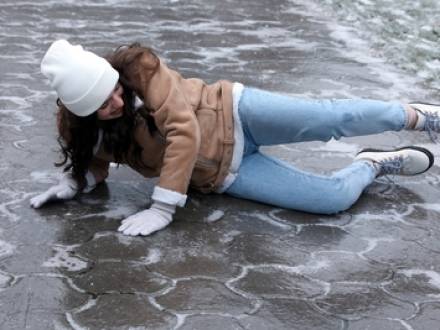 As the temperature starts to drop, slip and fall accidents become more common. Illinois driveways and sidewalks are prime territory for ice to form, especially if there’s a ready water source nearby, such as overflowing gutters or a leaking sprinkler. These kinds of icy patches can lead to questions of liability if someone injures themselves on them. Is the homeowner liable for creating the conditions, or is it a natural consequence of living in a cold, snowy place?
Whether the homeowner is responsible depends on how the ice formed and what the homeowner did about it. Illinois law treats ice from ordinary winter weather differently from ice the homeowner helped create.
If you find yourself hurt after a fall on ice in 2026, a Schaumburg, IL slip and fall attorney can help you figure out whether the homeowner may be liable.
When Is an Illinois Homeowner Liable for Ice on Their Property?
Illinois courts follow what is called the "natural accumulation" rule. Under this rule, a property owner generally does not have a duty to remove ice and snow that builds up naturally from the weather. For example, freezing rain that coats a driveway overnight is usually considered a natural accumulation.
A homeowner may be liable, however, when the homeowner creates or aggravates an unnatural accumulation of ice, or when an artificial condition on the property causes the ice to form. This is because Illinois law requires property owners to use reasonable care toward people lawfully on their property (740 ILCS 130/2).
What Counts as an Unnatural Accumulation of Ice in Illinois?
An unnatural accumulation comes from an artificial source. Examples can include:
- A downspout that drains water across a walkway
- A broken gutter that drips onto front steps
- A clogged gutter that overflows onto a sidewalk or driveway
- A leaking sprinkler or hose that freezes on a sidewalk
In these cases, the question is whether the homeowner knew or should have known about the problem and whether they had adequate time to address it.
How Does Shoveling a Sidewalk Affect Homeowner Liability for Slip and Fall Accidents in Illinois?
Illinois law gives residential property owners important protection when they remove or try to remove snow or ice from the sidewalk next to their property. Under the Snow and Ice Removal Act (745 ILCS 75/2), an owner is not liable for injuries caused by the snowy or icy condition of that sidewalk unless the owner’s conduct was willful or wanton.
This protection is limited to sidewalks adjoining a residence. It may not apply to a homeowner’s driveway, steps, or private walkway. Falls in those areas are usually analyzed under Illinois’s natural accumulation rule and other premises liability principles.
Can You Recover Damages if You Were Partly at Fault for a Slip and Fall on Ice in Illinois?
Illinois uses a modified comparative fault rule (735 ILCS 5/2-1116) that allows you to recover some damages as long as you were not more than 50 percent at fault. Your award is reduced by your share of the fault.
Homeowners and their insurers may argue that you were distracted while walking or should have worn better shoes. Evidence showing that their negligence created the hazard in the first place can help support your case. Photos of the ice and where it came from, and witness statements from neighbors about how long the ice has been there, can prove that a homeowner should have taken care of it before. If you can, photograph the area soon after the fall, before it melts or someone salts it.
Call an Arlington Heights, IL Slip and Fall Attorney Today
A fall on icy property can lead to broken wrists, hip fractures, and head injuries. If a negligent homeowner was responsible for your fall, you deserve to be compensated for your losses.
Our Schaumburg, IL personal injury lawyers are local attorneys who value the communities and clients we serve. Our team has many decades of combined experience and has recovered millions of dollars in successful verdicts for injured clients.
We offer free consultations. Call Newland & Newland, LLP at 847-797-8000 today.














Contact Our Firm
 The use of the Internet or this form for communication with the firm or any individual member of the firm does not establish an attorney-client relationship. Confidential or time-sensitive information should not be sent through this form.
I have read and understand the Disclaimer and Privacy Policy.