121 S. Wilke Road, Suite 301, Arlington Heights, IL 60005
Home and Hospital Visits for Your Convenience

FREE Phone & Video Consultations
Home and Hospital Visits for Your Convenience
Call for a FREE Phone Consultation
847-797-8000
Video Consultations Also Available
 Spanish
 Cantonese


- Home
- About Us
- Attorneys
- Practice Areas
- Personal Injury
- Bike Accidents
- Bus, School Bus, and Pace Accidents
- Car Accidents
- Boating, Watercraft and Jet Ski
- Catastrophic Injuries
- Defective Products
- Defective Medical Devices and Treatments
- Defective Drugs and Pharmaceuticals
- Dog Bites and Animal Attacks
- Food Poisoning
- Elder Abuse
- Motorcycle Accidents
- Nursing Home Abuse and Neglect
- Pedestrian Accidents
- Pothole Injuries
- Premises Liability
- Ridesharing, Uber and Lyft Accidents
- Sexual Abuse and Assault
- Train and Metra Accidents
- Truck Accidents
- Work Injuries
- Wrongful Death
- Medical Malpractice
- Workers’ Compensation
- Toxic Torts/Mass Torts
- Visit Our Foreclosure Website
- Referrals
- Personal Injury
- Case Results
- Media
- Blog
- Contact
Serving Clients Across 8 Illinois Locations
Who Is Liable for a Slip and Fall in a Building’s Common Areas?
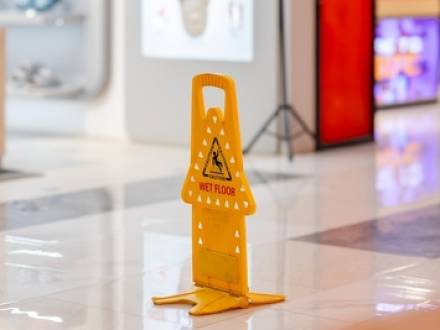 Common areas like lobbies, hallways, stairwells, and parking lots are typically the responsibility of a building’s owner or manager rather than individual tenants. In Illinois, whoever controls a common area is responsible for keeping it reasonably safe. A slip and fall injury in one of these areas will typically be compensated by this party if the legal claim is valid.
For anyone hurt in a fall in a common area in 2026, our Arlington Heights, IL personal injury lawyers can help establish what the case may be worth.
Who Controls the Common Areas in an Illinois Building?
Different buildings have different management methods. Depending on the building, the liable party may include:
- A landlord who owns an apartment building and is responsible for its shared spaces, or someone who manages the building on their behalf
- A condominium association responsible for the building’s common elements
- A commercial landlord in an office building or shopping center
- A contractor hired to maintain the area
In a condo building, the Condominium Property Act assigns the board the duty to provide for the care, upkeep, and maintenance of the common elements (765 ILCS 605/18.4). Elsewhere, a lease or management contract may indicate who handles which areas. More than one party can also share responsibility.
What Legal Responsibility Does a Property Owner Have for Common Areas in Illinois?
Owners and occupiers of property in Illinois must use reasonable care toward people lawfully on the premises (740 ILCS 130/2).
Reasonable care means inspecting common areas, making needed repairs, and fixing hazards that crop up within a reasonable time. Broken stair treads, loose handrails, torn hallway carpet, burned-out stairwell lights, exterior ice, and wet floors can all contribute to injuries from falls.
To hold the owner liable for a hazard it did not create, you must show that the owner knew or should have known about the danger and failed to take reasonable steps to address it. If the owner or its employees created the hazard, you do not need to prove that the owner had prior notice. Your case can be strengthened by documented reports that other people have previously made about the hazard that went unaddressed.
Is a Landlord Liable for a Slip and Fall on Snow or Ice in Illinois?
Snow and ice cases follow special rules in Illinois. A property owner generally isn’t liable for a fall on a natural accumulation of snow or ice. Liability may arise when the owner causes an unnatural accumulation, such as by piling snow where it melts and refreezes across a walkway. Something like a leaking downspout that drains onto a sidewalk may also lead to liability.
Once an owner chooses to try to remove snow, it may be liable if it does so carelessly and makes the area more dangerous.
What if a Tenant or Another Visitor Caused the Hazard in a Common Area?
Sometimes a neighbor or visitor creates a hazard, such as spilling a drink in a common area. The building owner may still be liable if it knew about the spill, or should have, and didn’t clean it up. If the owner had no reasonable chance to find it, the person who caused it may be responsible instead.
You may also share fault for the incident, depending on the circumstances. Illinois law indicates that your damages are reduced by your percentage of fault, and you can’t recover anything if you’re more than 50 percent at fault.
What Evidence Helps a Common Area Slip and Fall Claim in Illinois?
Report the fall in writing to the landlord, association, or building manager, and keep a copy. Take photos of the hazard, the lighting, and any lack of warning signs. Get contact information from witnesses, especially those who previously complained about the same problem.
Your lawyer can request other evidence that you don’t have access to. Emails, maintenance requests, or association meeting minutes may show the owner knew about the hazard and left it.
Call a Rolling Meadows, IL Slip and Fall Lawyer Today
Who ends up being responsible for a fall in a shared space often depends on leases, contracts, and maintenance records the owner controls. Trying to find all the evidence and sort out the liability on your own can be daunting, but our lawyers are ready to help.
Our Arlington Heights, IL personal injury attorneys are local attorneys who value the communities and clients we serve. Our team has many decades of combined experience and has recovered millions of dollars in successful verdicts for injured clients.
We offer free consultations. Call Newland & Newland, LLP at 847-797-8000 today.














Contact Our Firm
 The use of the Internet or this form for communication with the firm or any individual member of the firm does not establish an attorney-client relationship. Confidential or time-sensitive information should not be sent through this form.
I have read and understand the Disclaimer and Privacy Policy.